Soft Washing vs. Pressure Washing: Which Does Your Property Need?
Not every surface should be blasted with high pressure. Bergen County property owners often choose the wrong method — here is how to tell the difference.

Soft Washing vs. Pressure Washing: Which Does Your Property Need?
Walk through any commercial district in Bergen County and you will see the same mistake repeated on building after building: paint that has been blasted off brick, mortar joints that have been eroded, vinyl siding that has been cracked or warped. In almost every case, the culprit is not neglect — it is the wrong cleaning method applied by someone who treated every surface the same way.
After more than four decades of exterior cleaning in New Jersey, we have learned that the choice between soft washing and pressure washing is not a preference. It is a technical decision that protects your investment.
What Is Pressure Washing?
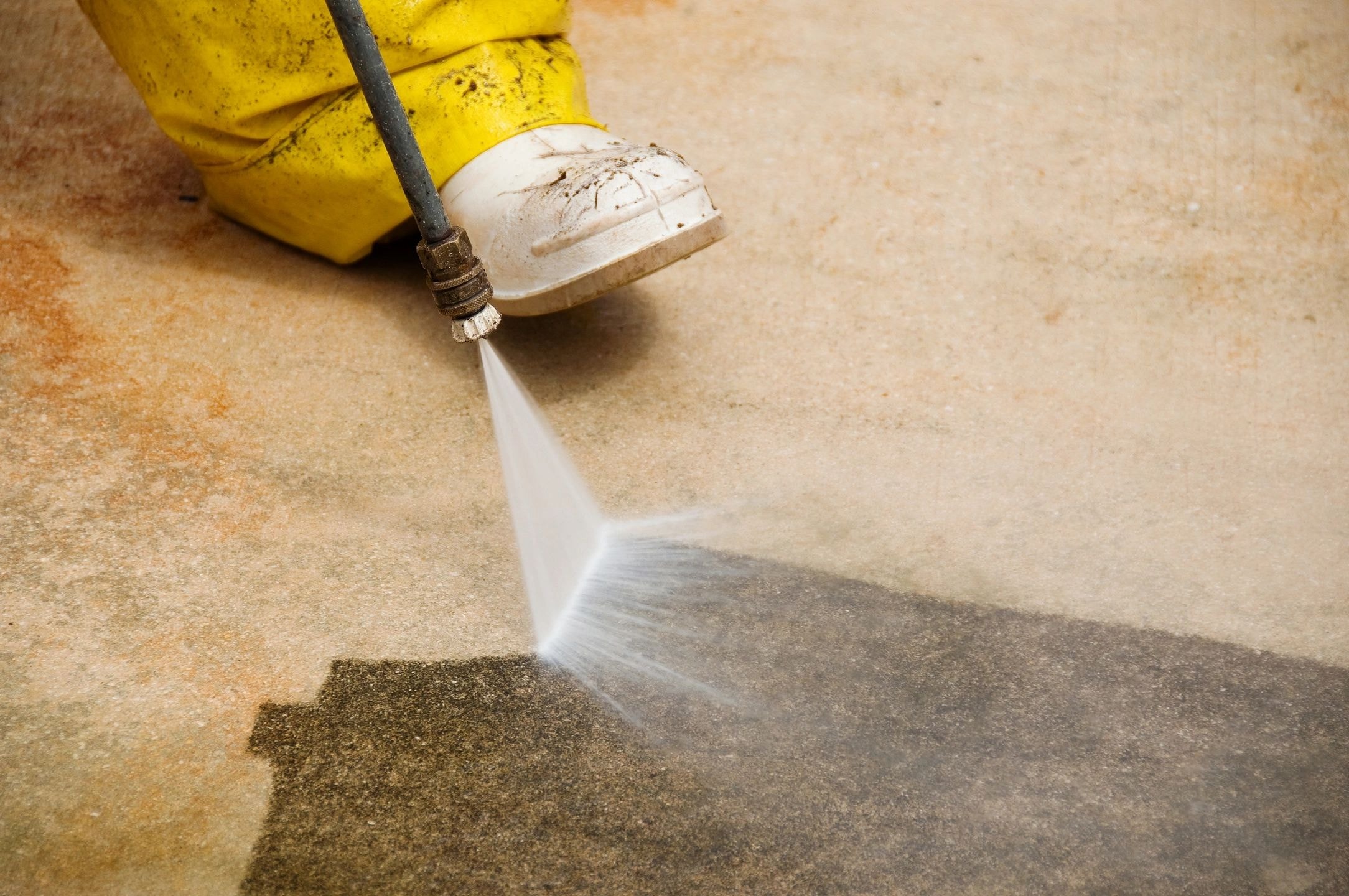
Pressure washing uses water delivered at high PSI — typically 1,500 to 4,000 pounds per square inch — to physically dislodge dirt, gum, oil, and debris. The force of the water does the work.
It is the right tool for hard, dense surfaces that can absorb that impact without damage:
- Concrete driveways and parking lots — oil stains, tire marks, and embedded grit require high pressure to lift
- Brick pavers — when the mortar is in good condition and the surface needs deep cleaning
- Concrete loading docks and warehouse floors — heavy grease and industrial residue
- Metal surfaces — dumpster pads, steel doors, and equipment pads
The key word is dense. If the surface can take the impact, pressure washing is faster and more thorough.
What Is Soft Washing?
Soft washing uses low pressure — typically under 500 PSI, similar to a garden hose — combined with biodegradable cleaning solutions that kill biological growth at the root. The chemistry does the work, not the force.
It is the correct method for surfaces that would be damaged by high pressure:
- Vinyl and fiber cement siding — high pressure forces water behind panels and into wall cavities
- Painted wood — strips paint and raises grain
- Stucco and EIFS — cracks and delamination are common pressure washing injuries
- Roofing — asphalt shingles lose granules; tile roofs crack
- Older brick and mortar — pre-1980s masonry often has softer mortar that erodes under pressure
- Window screens and frames — deform under high PSI
Soft washing also produces longer-lasting results on biological growth. High pressure removes the visible mold and algae but leaves the root structure behind. Soft washing kills the organism, so regrowth is significantly slower.
The Bergen County Factor
Our region's climate creates specific challenges. Humid summers accelerate mold and algae growth on north-facing walls and shaded surfaces. Salt air from the Hudson and the coast attacks metal and masonry. Winter freeze-thaw cycles exploit any crack that holds moisture.
This means Bergen County properties often need both methods — pressure washing on concrete and pavement, soft washing on building facades — applied in the right sequence by someone who knows which surface gets which treatment.
How We Assess a Property
When Therm-O-Jet evaluates a commercial property, we look at:
- Surface material and age — older materials require gentler methods
- Type of contamination — oil and gum need pressure; mold and algae need chemistry
- Condition of seals and caulking — compromised seals mean water intrusion risk
- Proximity to landscaping — runoff from cleaning solutions must be managed
The goal is always the same: the cleanest result with the least risk to your property.
If you are not sure which method your Bergen County property needs, call us at (201) 697-3695. We will walk the property with you and give you a straight answer before any work begins.
Explore Topics
Written by
Therm-O-Jet Power Washing
Content creator and writer sharing insights and stories.